If your garden is producing a steady stream of green beans, quick pickling is one of the easiest ways to stay ahead of the harvest. You get that classic tangy, garlicky “dilly bean” flavor without the pressure of water bath canning. These are refrigerator pickles, meaning they are made to be kept cold and eaten within a few weeks.
Below is the simple method I use at home: a dependable brine, a couple of crunch tricks that actually work, and a few flavor combinations so you can use what you have.
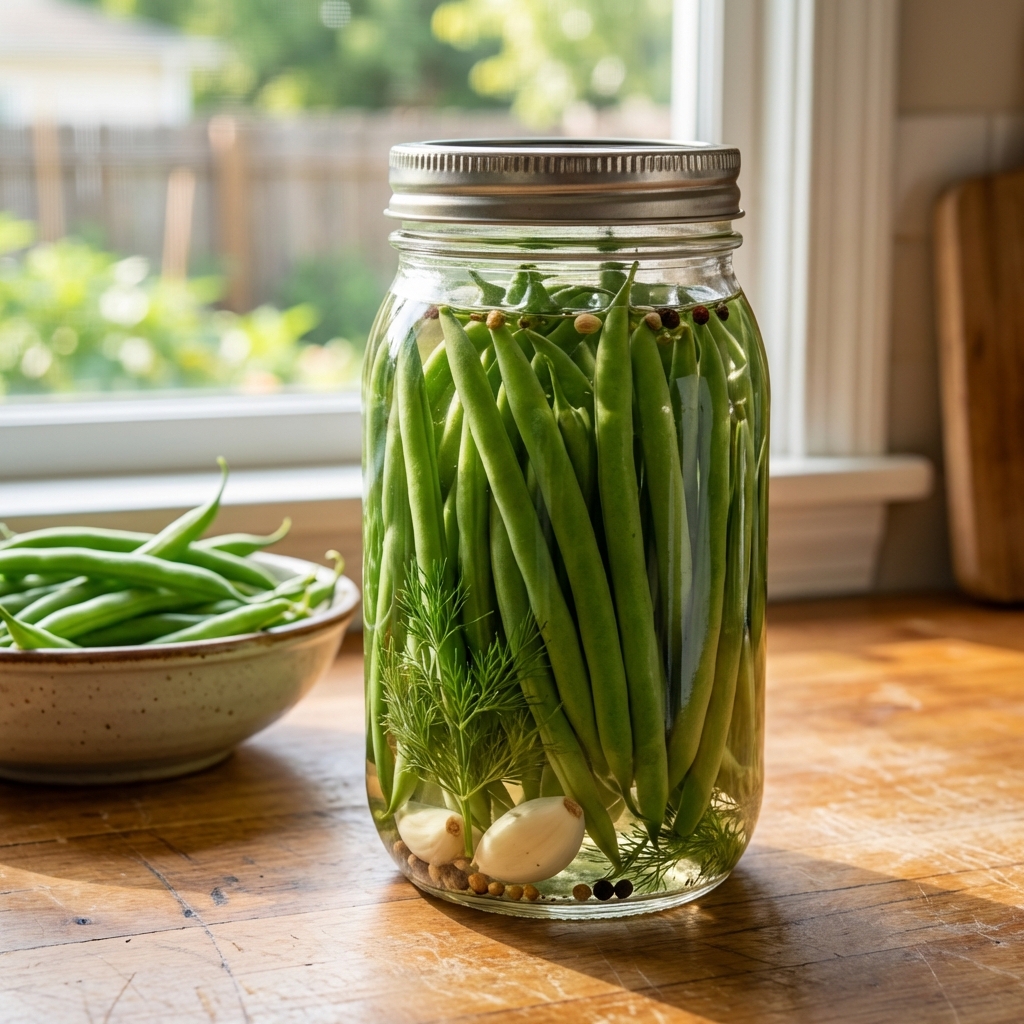
Why quick pickling works for green beans
- Fast: You can have jars in the fridge in about 15 minutes.
- Flexible: Swap spices based on what is in your pantry or garden.
- Great texture: Green beans hold crunch better than many softer vegetables, especially if you use fresh beans.
- Low commitment: No canner, no boiling jars, no worrying about shelf stability.
Keep expectations realistic: refrigerator pickles are not meant for long-term pantry storage. They are meant for snacking, charcuterie boards, Bloody Marys, and quick side dishes.
Best beans to use (and prep)
The crunch comes from starting with the right beans. Older, larger pods can still be pickled, but they tend to be a little more fibrous.
What to look for
- Fresh-picked, firm pods: Ideally within a day of harvest.
- Medium size: Too thin can get bendy fast; too thick can be stringy.
- Unblemished: Skip pods with soft spots.
Prep tips
- Wash well and dry.
- Trim stem ends. If you want “standing jars,” trim beans to fit the jar height.
- If beans are very long, cut into halves so they pack easier.
- Use a clean jar and lid. Hot soapy water is plenty for refrigerator pickles.

Quick pickled green beans (fridge)
This is a simple, balanced brine that is tangy but not harsh. It is also easy to scale up. Make one jar first, then decide if you want to do a whole batch.
What you need (1 quart jar)
- About 1 pound fresh green beans (enough to fill 1 quart jar when packed snugly)
- 1 cup distilled white vinegar (5% acidity)
- 1 cup water
- 1 tablespoon kosher salt (or pickling salt), about 10 g (salt brands vary, so weight is the most consistent)
- 1 tablespoon sugar (optional, helps round out the bite)
- 2 cloves garlic, lightly crushed
- 1 to 2 dill sprigs (or 1 teaspoon dried dill seed)
- 1/2 teaspoon mustard seed (optional but classic)
- 1/4 to 1/2 teaspoon red pepper flakes (optional)
Step-by-step
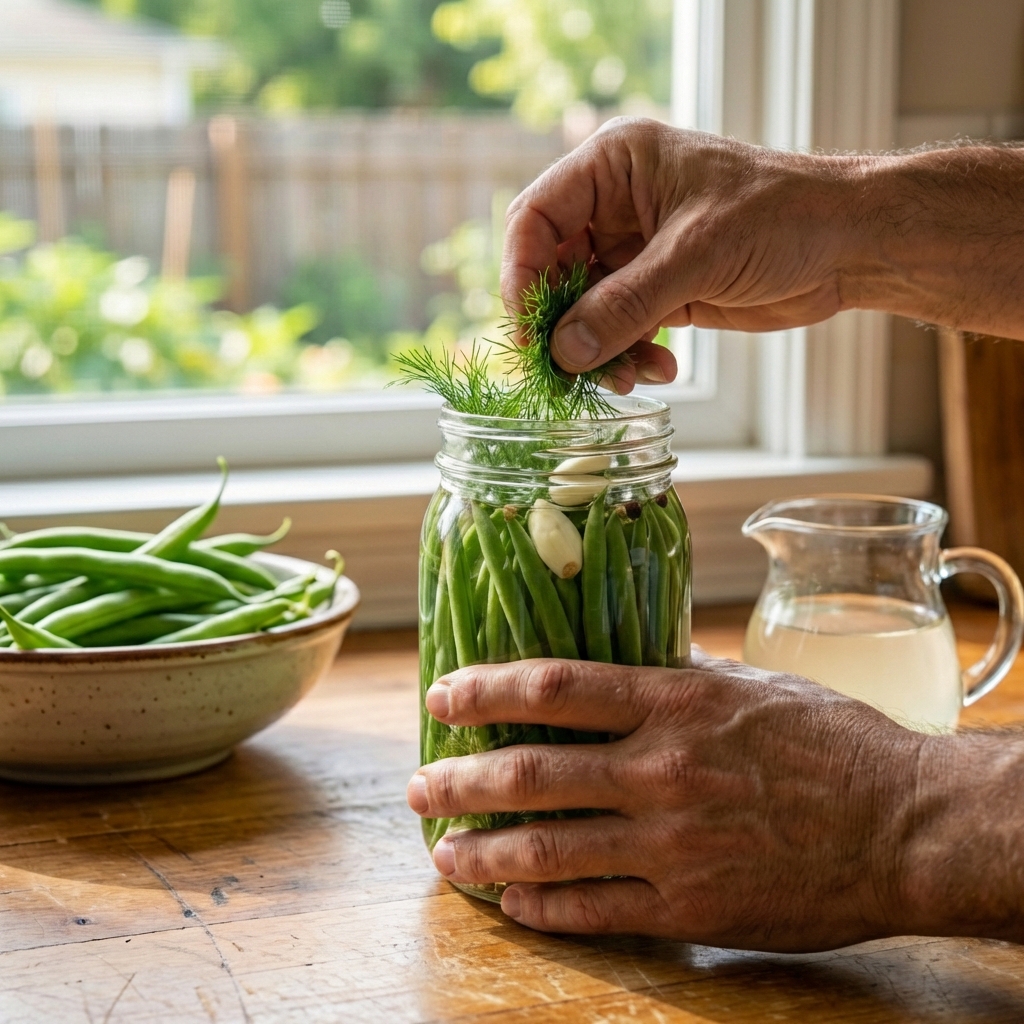
- Pack the jar: Add garlic, dill, and any spices to the bottom. Pack beans in tightly so they stay put and stay submerged once the brine goes in.
- Make the brine: In a small pot, heat vinegar, water, salt, and sugar just until the salt dissolves. No need to boil hard.
- Pour and submerge: Let the brine cool for a minute or two (you want it warm, not ripping hot), then carefully pour over beans, leaving about 1/2 inch of headspace. Tap the jar to release trapped bubbles.
- Keep everything under the brine: If a few beans want to float, use a small clean fermentation weight or tuck in a folded piece of cabbage leaf to help hold things down.
- Cool, then refrigerate: Let the jar cool to room temperature, then cover and refrigerate.
- Wait (a little): They are decent after 24 hours, but best after 2 to 3 days.
Storage: Keep refrigerated (ideally below 40°F/4°C) and use within up to 3 to 4 weeks for best flavor and texture. If anything smells off, develops mold, or turns unexpectedly cloudy along with a bad odor or sliminess, toss it.
How to keep them crunchy
Quick pickles can go soft for a few common reasons. Here are the fixes that make the biggest difference in real kitchens.
- Start with fresh beans: Limp beans make limp pickles.
- Do not overheat the beans: Warm brine is fine. Boiling-hot brine can start cooking the beans and softening them.
- Keep them fully submerged: Exposed beans discolor and soften faster.
- Optional crunch boost: Add 1/8 teaspoon calcium chloride (often sold as Pickle Crisp) per quart jar, or follow the brand label. It helps a lot and does not change flavor.
Some folks add grape leaves for tannins. If you have pesticide-free grape leaves handy, go for it. If you do not, do not stress about it. Fresh beans, gentle heat, and full submersion matter more.
Flavor ideas
Once you have the basic brine down, the fun is in the jar add-ins. Keep it simple, especially on your first batch, so you know what you actually like.
Classic dilly
- Dill sprigs or dill seed
- Garlic
- Mustard seed
- Black peppercorns
Spicy
- 1 small hot pepper (whole, slit) or 1/2 teaspoon red pepper flakes
- Extra garlic
- A pinch of smoked paprika
Ginger and sesame
- 3 to 4 thin slices fresh ginger
- 1/2 teaspoon sesame seeds
- Swap part of the white vinegar for rice vinegar if you like a softer tang (still keep these refrigerated)
Ways to use them
- Snack straight from the jar: Cold and crunchy is the point.
- Bloody Mary garnish: One bean is good. Two is better.
- Charcuterie and cheese boards: They cut through rich flavors.
- Chopped into potato salad: Use a little brine as part of the dressing.
- Alongside grilled meat: Quick acid to balance a heavy plate.
Troubleshooting
My beans turned olive green
This usually happens when the brine is too hot and lightly “cooks” the beans. Next time, let the brine cool a few minutes before pouring. (Some people blanch beans for color before pickling, but I skip it for crunch and simplicity.)
They are too sour
Easiest fixes: add the optional sugar, give them another day in the fridge (the flavor rounds out), or swap part of the vinegar for a milder one next time (rice vinegar or apple cider vinegar). I do not recommend diluting the brine heavily with extra water. Less acidity can shorten fridge life and make spoilage more likely.
They are soft
Soft usually means older beans, too much heat, or not staying submerged. Try fresher beans, use warm (not boiling) brine, keep everything under the brine, and consider calcium chloride.
Quick safety note
These are refrigerator pickles. Do not store them at room temperature. The key safety control here is clean handling plus cold storage, not a specific brine ratio.
If you are looking for shelf-stable canned dilly beans, you need a tested canning recipe and proper processing time.
If you stick to clean jars, a reliable vinegar brine, full submersion, and cold storage, quick pickled green beans are one of the easiest “preserve the harvest” wins you can pull off in a normal backyard season.

Jose Brito
I’m Jose Britto, the writer behind Green Beans N More. I share practical, down-to-earth gardening advice for home growers—whether you’re starting your first raised bed, troubleshooting pests, improving soil, or figuring out what to plant next. My focus is simple: clear tips you can actually use, realistic expectations, and methods that work in real backyards (not just in perfect conditions). If you like straightforward guidance and learning as you go, you’re in the right place.