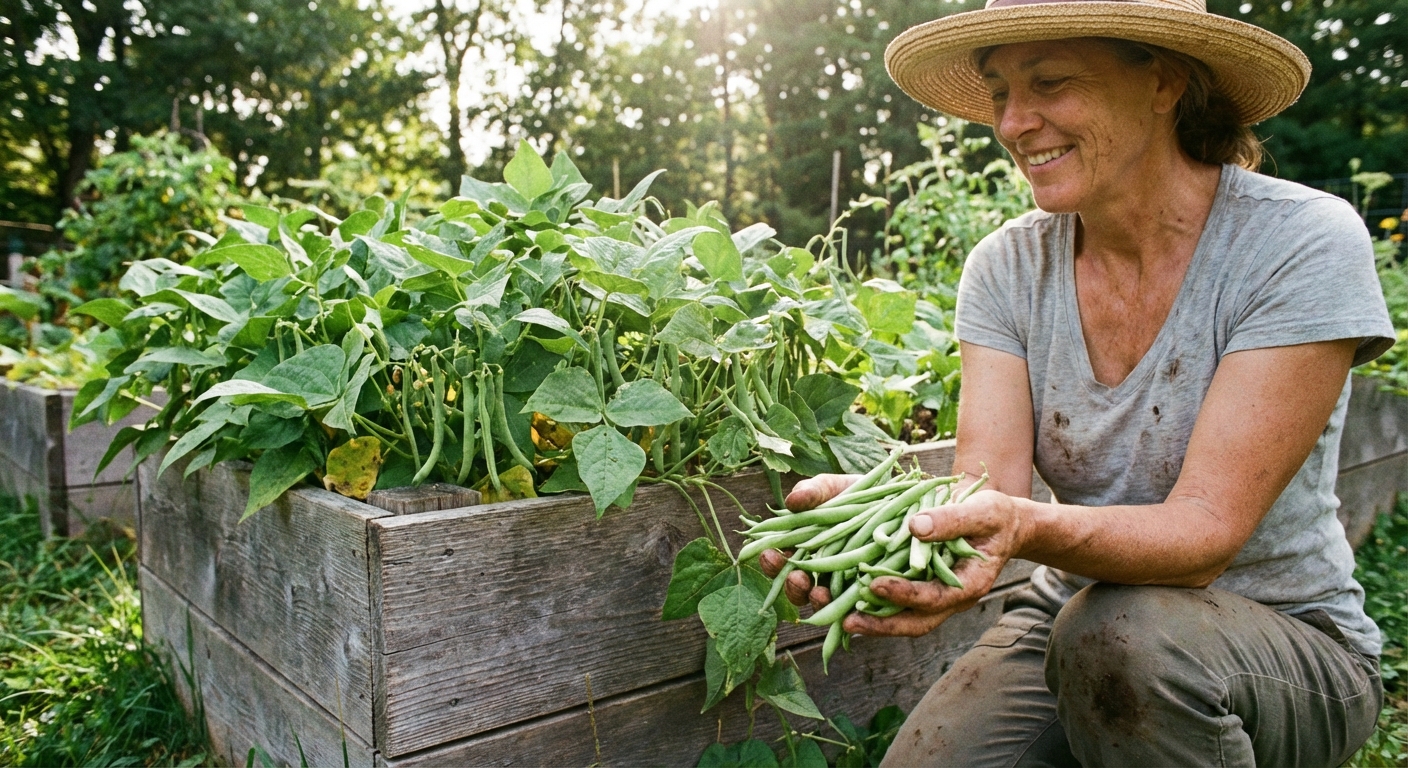
Bush beans are one of the easiest vegetables to grow, and they pull their weight in the garden. They sprout fast, don’t need a trellis, and usually start producing in about 6 to 9 weeks depending on variety and weather. If you want a crop that feels rewarding even in a less-than-perfect backyard setup, bush beans are a solid pick.
Why bush beans are worth growing
Bush beans (also called snap beans or green beans) grow as compact plants, usually 12 to 24 inches tall. That means:
- No staking or trellising for most varieties
- Great for raised beds and containers
- Quick harvest, especially compared to bigger crops
- Easy to fit into tight spaces
They also help the soil. Beans are legumes, which means they can work with soil bacteria to fix nitrogen. That only happens when roots have the right rhizobia (that’s where inoculant can help). In real gardens, I still recommend starting with decent soil and not treating beans like a “no fertilizer needed” miracle plant, but they are generally light feeders.
One expectation to set early: bush beans tend to produce in a more concentrated flush than pole beans. You can stretch the season, but you usually do it by planting more than once.
Best conditions for bush beans
Sun
Aim for full sun, which is at least 6 hours a day. If you get 8 hours, even better. In hot climates, a little afternoon shade can reduce stress and help plants keep setting pods.
Temperature
Bush beans are warm-season plants. They hate cold soil and they will sit there doing nothing if it’s too chilly.
- Plant after the last frost
- Soil temperature should be at least 60°F, with 65°F to 85°F being the sweet spot
- If nights are still dipping near the 40s, wait
Soil
Beans do best in soil that is loose, well-draining, and moderately fertile. Too much nitrogen can give you big leafy plants and fewer beans.
- Target pH: about 6.0 to 7.0
- Drainage matters: soggy soil often leads to rot and weak plants
- Compost helps: a thin layer mixed into the top few inches is usually enough

When to plant bush beans
Planting time depends on your last frost date, but the bigger factor is soil warmth. A common mistake is planting on a sunny day in spring while the soil is still cold.
- Spring planting: 1 to 3 weeks after last frost, once soil warms
- Late summer planting: count backward from your first expected frost. Many bush beans need 45 to 65 days to produce, and they need warm soil to get going
Varieties to try
If you’re keeping it simple, pick one dependable variety and learn its rhythm. A few reliable types gardeners come back to:
- Provider: steady producer and handles cool springs better than many
- Blue Lake Bush: classic snap bean flavor and good yields
- Contender: fast and productive, a solid all-around pick
- Roma II (romano type): wider, meatier pods with great flavor
If your summers get brutally hot, look for varieties described as heat-tolerant and plan spring and late-summer plantings to avoid the worst heat during flowering.
How to plant bush beans
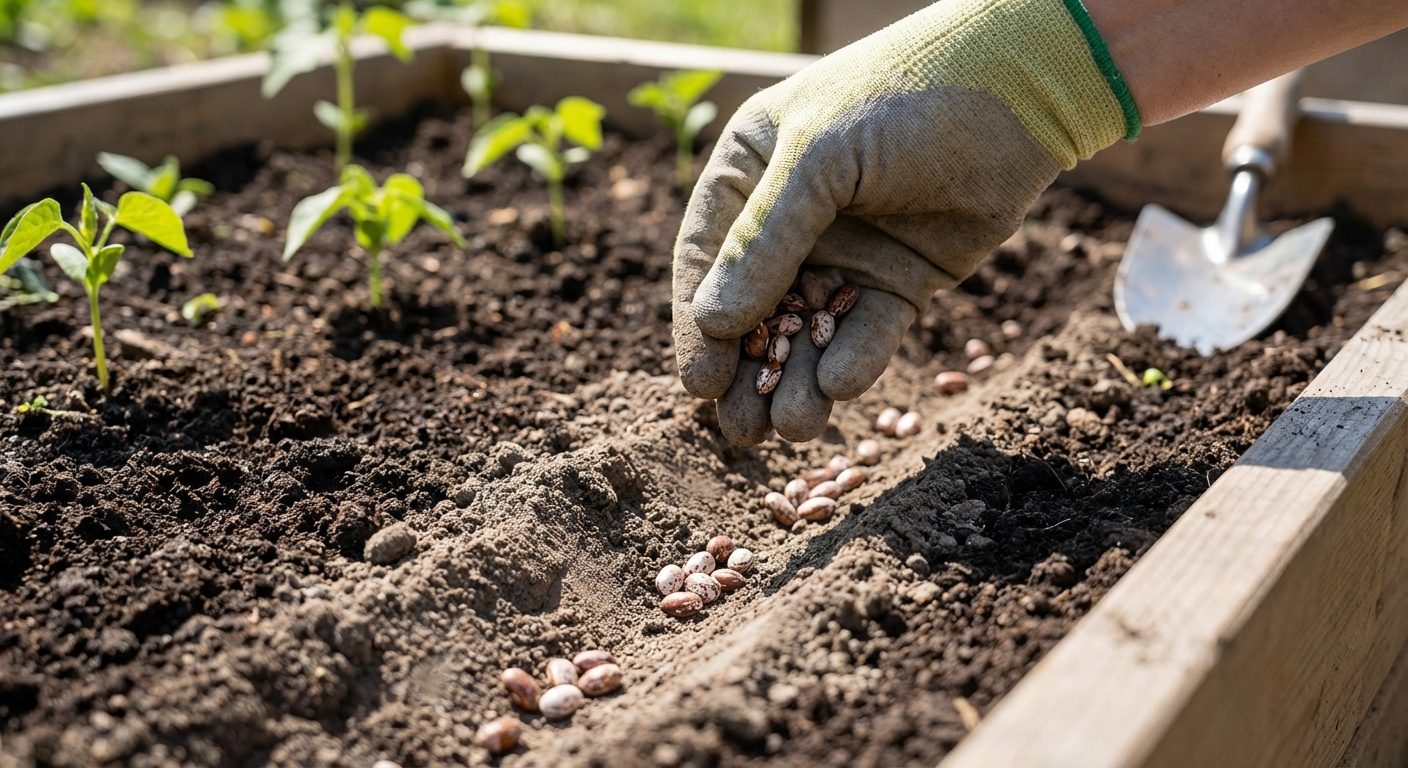
Bush beans are best direct-sown. They generally don’t love transplanting, and there is no real benefit to starting them indoors unless you’re working around a very short season.
Seed depth and spacing
- Depth: 1 inch (a little less in heavy soil)
- Spacing in rows: 3 to 6 inches apart
- Row spacing: 18 to 24 inches
- Raised bed spacing: plant in blocks, about 4 to 6 inches apart
Simple planting routine
Loosen the top 6 inches of soil and remove rocks or clods.
Mix in compost if your soil is sandy or tired, but skip heavy nitrogen fertilizers.
Sow seeds at the right depth and cover firmly.
Water gently, enough to moisten the whole seed zone.
Keep soil lightly damp until sprouts appear, usually 7 to 10 days in warm soil.
If you plant extra seeds “just in case,” thin seedlings to your final spacing once they are a couple inches tall. Snip at soil level instead of yanking, since beans don’t love root disturbance.
Watering bush beans
Bush beans like consistent moisture, especially during flowering and pod fill. The goal is steady growth, not soggy soil.
- Weekly target: about 1 inch of water total (rain plus irrigation)
- Water deeply: fewer, longer waterings beat frequent light sprinkles
- Water at the base: wet leaves invite disease, especially in humid weather
A good practical test: stick your finger 2 inches down. If it’s dry at that depth, water. If it’s cool and damp, hold off.
Fertilizing
If your soil has compost and isn’t extremely depleted, bush beans often do fine without much added fertilizer.
What to use
- Compost: best all-around option
- Balanced fertilizer: something like 5-5-5 can be used lightly if plants look pale and growth is weak
- Avoid high nitrogen: anything heavily weighted toward nitrogen can reduce pod production
Inoculant
Bean inoculant can help in brand-new beds or places where legumes haven’t been grown before. In many home gardens, it’s optional. If you try it, follow the label and keep expectations realistic. It helps nodulation and nitrogen fixation, but it doesn’t replace decent soil and good watering.
Mulching and weeding
Beans don’t like root disturbance, so aggressive hoeing can do more harm than good. A light mulch and gentle hand weeding goes a long way.
- Mulch after seedlings are a few inches tall so soil has warmed
- Use straw, shredded leaves, or untreated grass clippings
- Keep mulch a couple inches away from the stems to reduce rot
Common bush bean problems
1) Seeds rot or don’t sprout
Most common cause: cold, wet soil.
- Wait for warmer soil next time
- Improve drainage with compost and raised beds
- Plant a little shallower if your soil is heavy
2) Flowers drop, few pods form
Common causes: heat stress, inconsistent watering, or too much nitrogen. Beans are self-fertile, but extreme heat can still reduce pod set.
- Water consistently, especially during flowering
- Mulch to stabilize moisture
- Skip nitrogen-heavy fertilizer
- In hot spells, morning sun with afternoon shade can help if you have that option
3) Chewed leaves and missing seedlings
Early damage is often from slugs, earwigs, or rabbits.
- Use shallow slug traps or hand pick at dusk
- Protect seedlings with a simple barrier or mesh if rabbits are a problem
- Keep mulch pulled back until plants are established if slugs are heavy
4) Aphids on tender growth
Aphids cluster on new growth and under leaves.
- Blast them off with a strong spray of water
- Pinch off the worst tips if it’s concentrated
- If needed, use insecticidal soap in the evening and repeat as directed
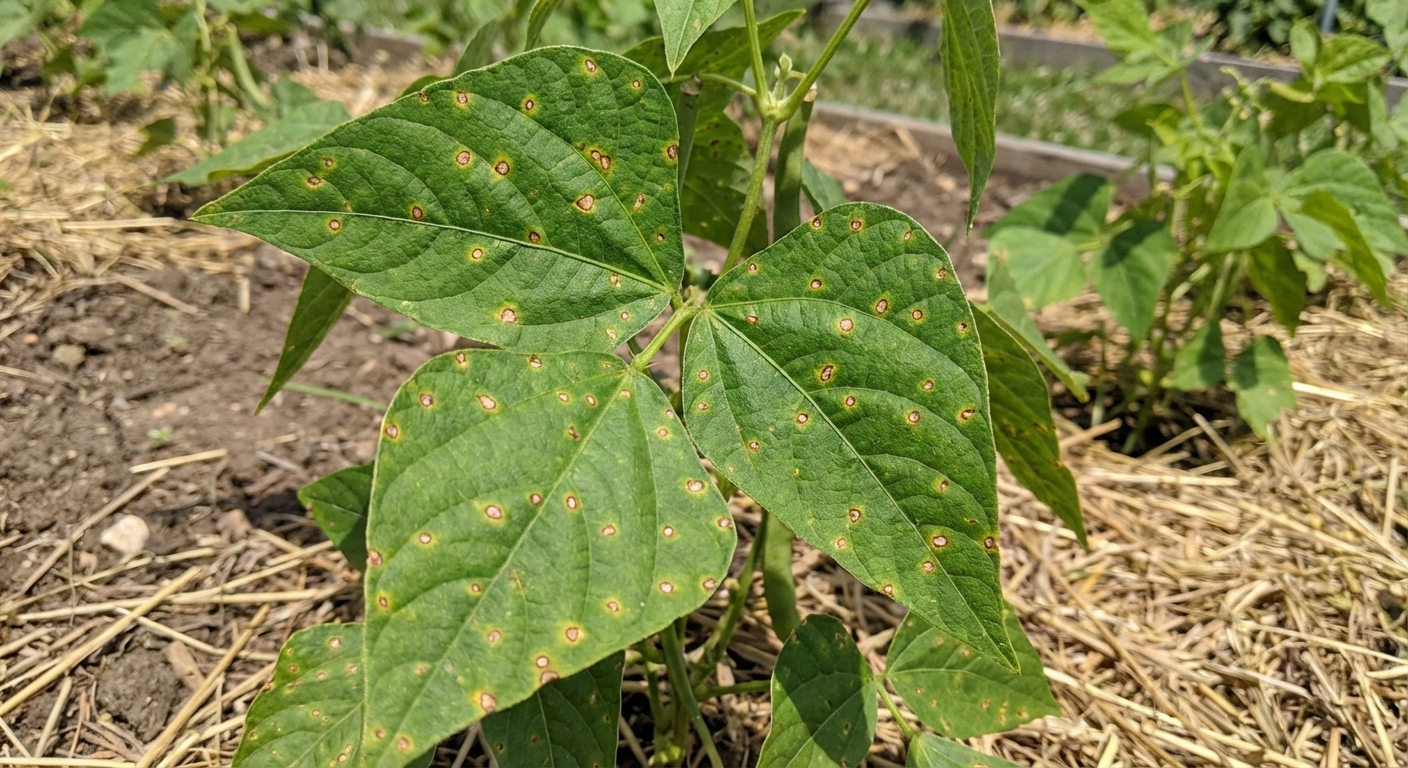
5) Leaf spots and mildew
Bean diseases are more likely when leaves stay wet and air circulation is poor.
- Water at soil level, not overhead
- Give plants enough spacing for airflow
- Remove heavily infected leaves and don’t compost diseased material
- Rotate crops and avoid planting beans in the same spot every year
How long do bush beans take to grow?
Most bush beans are ready in 45 to 65 days (about 6 to 9 weeks), but temperature and moisture make a big difference.
- Germination: 7 to 10 days in warm soil
- First flowers: often 4 to 6 weeks after planting
- First harvest: usually 1 to 3 weeks after flowering starts
If you want a steady harvest instead of one big flush, harvest frequently and plan on planting more than once.
Harvesting bush beans
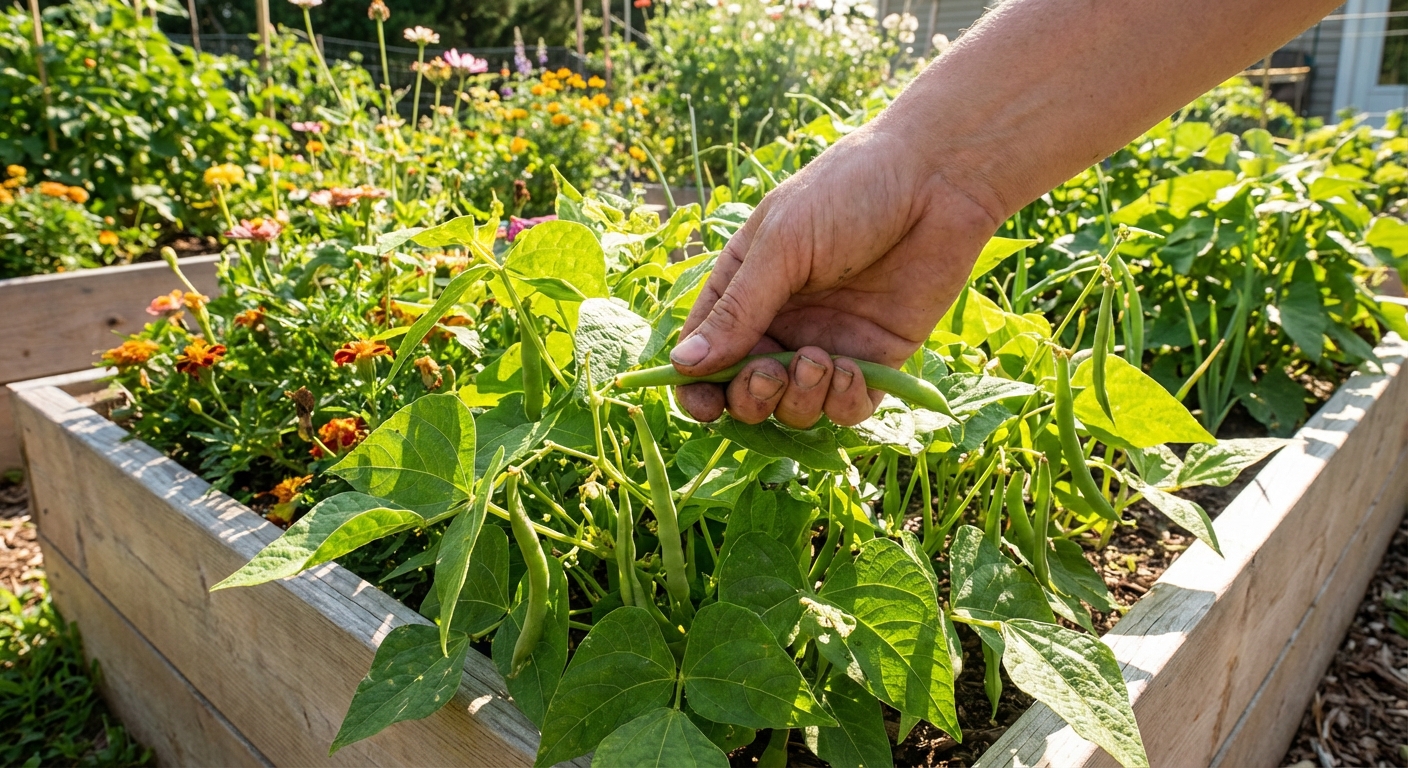
Picking regularly is the secret. The more you harvest, the more the plant keeps producing.
When to pick
- Pick when pods are firm, crisp, and the seeds inside are still small
- Most varieties are best around 4 to 6 inches long, but go by thickness and tenderness, not just length
- If pods get fat and bumpy, they’re past prime for snap beans
How to pick without damaging plants
Hold the stem with one hand and snap the pod with the other. Yanking can tear branches, especially on young plants.
How to store your harvest
For best texture, store beans unwashed in a breathable bag in the refrigerator and use them within about a week.
Succession planting
If you plant one big batch, you’ll often get a heavy harvest window and then it fades. Instead, plant smaller batches.
- Plant a new section every 2 to 3 weeks for a longer harvest
- In hot climates, pause during extreme heat and resume when nights cool slightly
- Mix early and mid-season varieties if you want more overlap in harvest timing
- Label planting dates so you know what’s coming next
Bush beans in containers
If you’re short on space, bush beans do well in pots as long as you don’t let them dry out.
- Container size: at least 10 to 12 inches deep, with drainage holes. A 3 to 5 gallon pot is a good starting point for a small planting.
- Soil: quality potting mix, not straight garden soil
- Spacing: 4 to 6 inches between plants (make sure the pot is wide enough to actually fit that)
- Water: expect to water more often in summer
Container beans usually need a bit more attention with watering, but they’re still beginner-friendly.
Quick bush bean checklist
- Plant after frost, when soil is at least 60°F (65°F+ is better)
- Sow seeds 1 inch deep, 3 to 6 inches apart
- Full sun, steady moisture, good drainage
- Light feeding only, avoid heavy nitrogen
- Harvest often to keep plants producing
What to plant after bush beans
After beans finish, the bed is a great spot for crops that appreciate improved soil structure and leftover fertility. Good follow-ups include:
- Fall greens: lettuce, spinach, arugula
- Brassicas: kale, broccoli, cabbage (especially if you add compost)
- Root crops: carrots, beets
Just avoid planting beans in the same spot again right away if you had disease issues. Rotation helps a lot.
One last practical tip
If you’re new to bush beans, start with one dependable variety and focus on the basics: warm soil, consistent watering, and harvesting on time. Most “bean problems” are really timing and moisture problems. Get those two right and you’re already ahead.

Jose Britto
I’m Jose Britto, the writer behind Green Beans N More. I share practical, down-to-earth gardening advice for home growers—whether you’re starting your first raised bed, troubleshooting pests, improving soil, or figuring out what to plant next. My focus is simple: clear tips you can actually use, realistic expectations, and methods that work in real backyards (not just in perfect conditions). If you like straightforward guidance and learning as you go, you’re in the right place.