Green bean casserole is one of those dishes that shows up every year whether you planned on making it or not. It is comforting, familiar, and honestly pretty forgiving. The problem is that it can also turn into a bland, soggy pan of beige if the beans overcook or the topping goes soft.
Below is a practical way to get a casserole that still tastes like green beans, has a creamy sauce that is not gluey, and keeps that crispy onion topping where it belongs: on top.
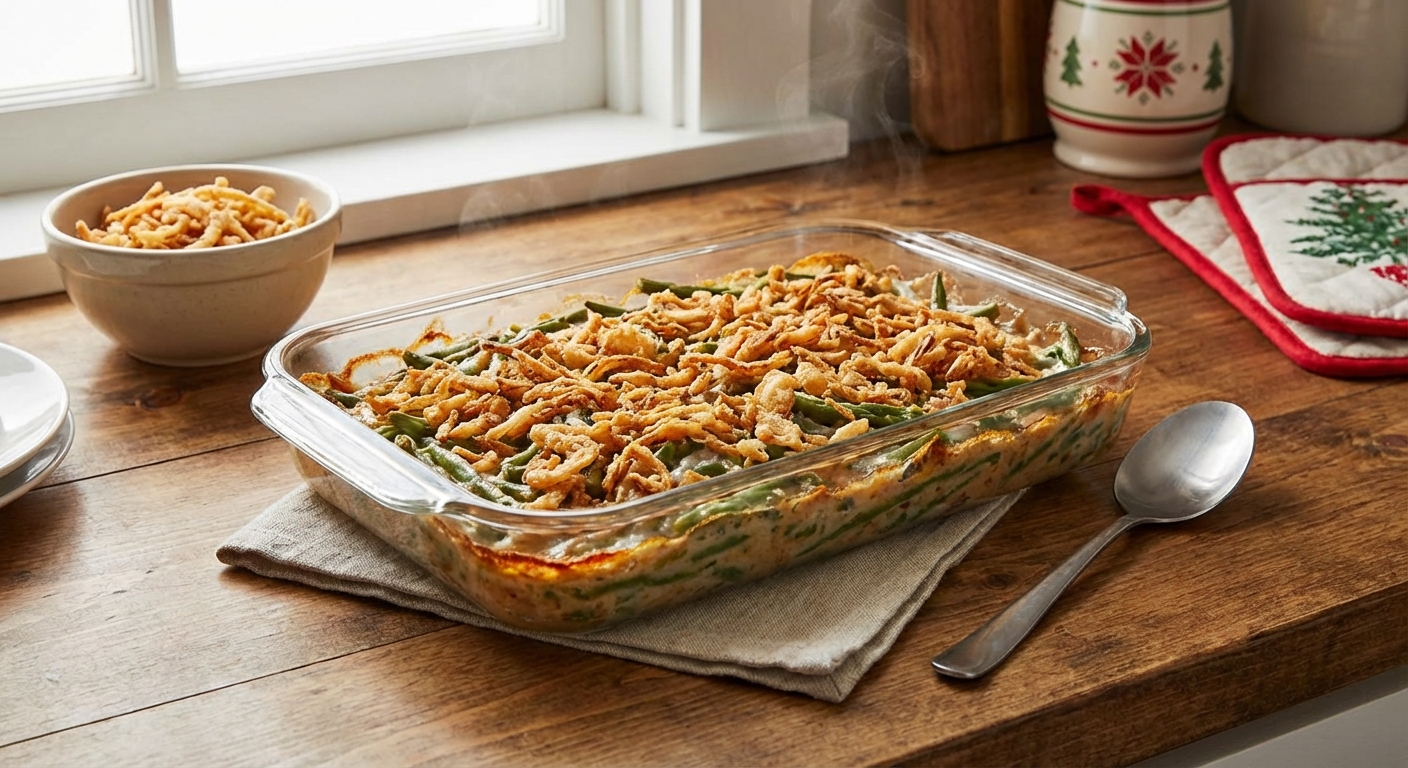
What makes a great green bean casserole
- Beans with bite: tender, not mushy.
- Balanced sauce: creamy without tasting like straight salt.
- Crunch that lasts: onions added at the right time, not from the start.
- Realistic timing: a dish you can prep ahead and bake when you need it.
Standard batch (easy starting point)
If you want a baseline so you are not guessing, start here and adjust for your crowd:
- For a 9x13 dish: about 2 lb green beans (fresh trimmed, or frozen), 2 to 2 1/2 cups sauce, and 1 1/2 to 2 cups crispy fried onions for the top.
- For an 8x8 dish: about 1 lb green beans, 1 to 1 1/4 cups sauce, and 3/4 to 1 cup crispy fried onions.
Option B (from-scratch sauce below) is designed to land in that 2-ish cup sweet spot and replace about 2 cans of condensed soup once it thickens.
Choosing your beans: fresh, frozen, or canned
You can make a good casserole with any of the three. The biggest difference is texture and how much prep you want to do.
Fresh green beans
Best flavor and texture when you do a quick blanch first.
- Trim ends and cut into 1 to 2 inch pieces.
- Blanch in salted boiling water until bright green and crisp-tender, usually 3 to 5 minutes. Start checking early and taste one.
- Drain, then cool quickly under cold running water (or in an ice bath) so they stop cooking. Drain well.
Garden note: If your homegrown beans are larger or more mature, they may need a bit longer. Use the doneness cue (crisp-tender) rather than the clock, since thickness, altitude, and freshness all change the timing.
Frozen green beans
The easiest path to consistent results. They are typically blanched before freezing, but texture can vary by brand and cut.
- Thaw and drain, or rinse under cool water and drain well.
- Pat lightly with a towel if they seem watery.
Canned green beans
Works in a pinch, but they are already fully cooked so they can go soft fast.
- Drain very well and rinse to reduce the canned flavor.
- Reduce bake time slightly so you do not cook them into paste.
The sauce: classic, upgraded, or from scratch
The traditional version uses canned cream of mushroom soup, and there is nothing wrong with that if it is what you like. If you want a more from-scratch flavor without making things complicated, a quick mushroom sauce is the best upgrade you can make.
Option A: Classic shortcut
- 1 to 2 cans cream of mushroom soup (10.5 oz each), depending on how saucy you like it
- Milk to loosen (start with 2 to 6 tablespoons per can, then adjust)
- Black pepper, and go easy on extra salt at first
Salt note: Soup + broth + soy/Worcestershire can stack sodium fast. Taste before you add salt, and then taste again after baking.
Option B: Simple from-scratch mushroom sauce (my go-to)
This gives you a richer flavor and better control over salt. It is also thick enough to bind the casserole without turning watery.
- 8 to 12 oz mushrooms, sliced
- 2 tablespoons butter or olive oil
- 1 small onion or 1 to 2 shallots, finely chopped (optional but recommended)
- 3 tablespoons flour (use 4 tablespoons if you want it very thick)
- 1 1/4 to 1 1/2 cups milk (or half milk, half broth)
- Up to 1/2 cup broth, only as needed to thin
- Salt and pepper to taste
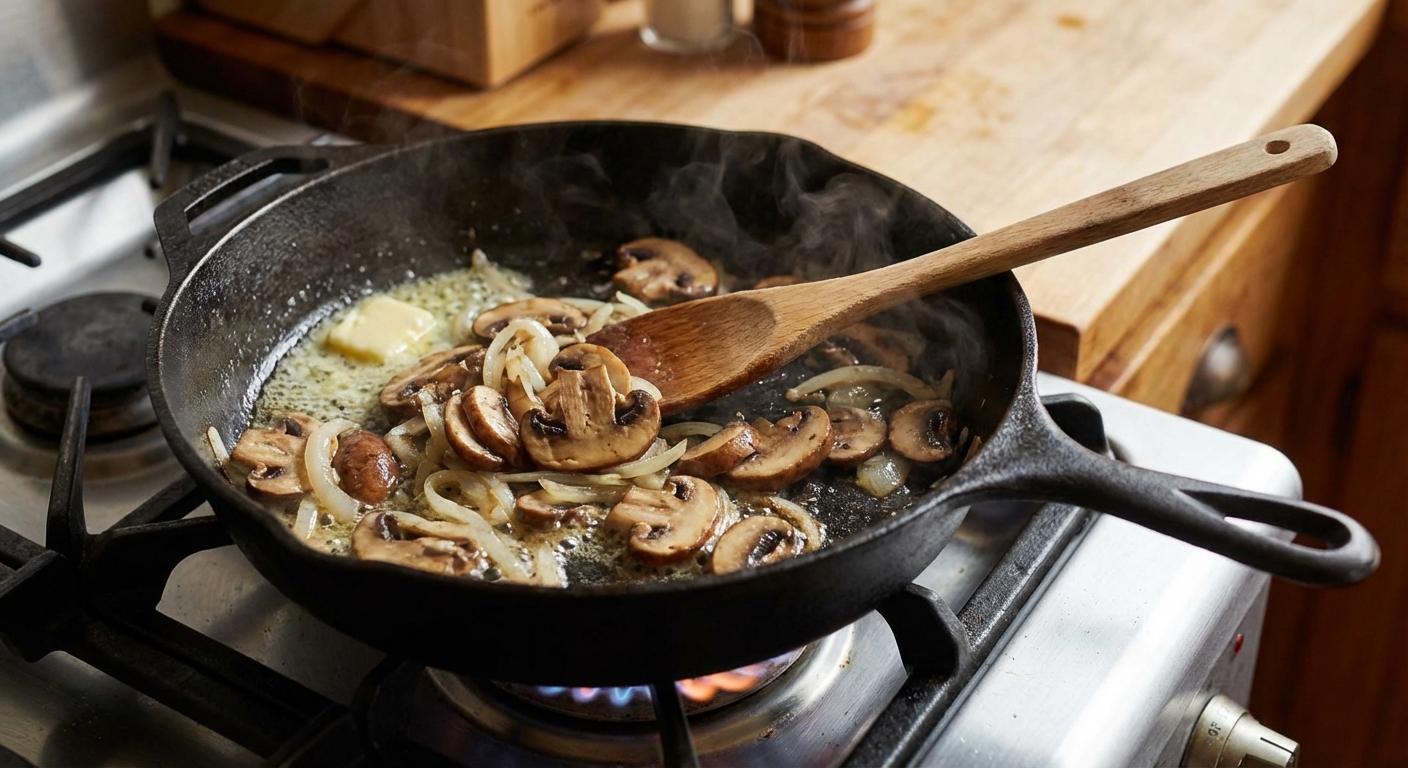
How to do it: Sauté mushrooms (and your aromatic onion/shallot) in butter until they release moisture and start browning. Sprinkle in flour and cook 1 minute. Slowly whisk in milk. Simmer until thick enough to coat a spoon, closer to a thick gravy than a thin soup. Thin with a splash of broth only if needed. Taste, then season.
Option C: Add-ins that actually help
- Garlic: 1 to 2 cloves minced, added with the mushrooms.
- Splash of soy sauce or Worcestershire: 1 teaspoon for depth (especially helpful if you skip broth).
- Cheese: a small handful of shredded cheddar or parmesan for a slightly richer bake.
How to assemble and bake (no soggy onions)
This is the part that makes or breaks it. The onions lose crunch if they sit in steam too long.
- Preheat: 350°F. Set the oven rack in the middle.
- Mix: green beans + sauce + a little black pepper. If you want onions inside the casserole, keep it to a small handful so the topping still gets the spotlight.
- Dish: spread into a lightly greased baking dish (9x13 for a crowd, or 8x8 for smaller batches).
- Bake uncovered: 20 to 25 minutes, until bubbling around the edges.
- Top: add a generous layer of crispy fried onions.
- Finish: bake 5 more minutes, just long enough to toast the topping.
Texture tip: If your sauce seems a little thin before baking, it will usually tighten in the oven. If it is watery, your beans probably were not drained well, or your sauce needed a longer simmer.
Make-ahead plan
If you are juggling a busy meal, the goal is to prep earlier and keep the topping crisp.
1 day ahead
- Blanch fresh beans (or thaw and drain frozen).
- Make the mushroom sauce.
- Mix beans and sauce, cover, and refrigerate in the baking dish.
Day of
- Let the dish sit at room temp 20 to 30 minutes while the oven heats so it bakes evenly. For food safety, do not leave it out longer than that.
- Bake until hot and bubbling, then add onions for the last 5 minutes.
Leftovers
Store covered in the fridge 3 to 4 days. Reheat in the oven if you can. The microwave works, but the topping will go soft. If you want crunch, add a fresh sprinkle of onions after reheating.
Common problems and quick fixes
My casserole is watery
- Drain beans better next time, especially frozen or canned.
- Simmer the sauce longer before mixing (you want it to coat a spoon).
- Bake uncovered unless the top is browning too fast.
My beans are mushy
- Blanch less and cool quickly if using fresh beans. Taste one and stop when they are crisp-tender.
- Reduce bake time if using canned beans.
- Keep the casserole at a gentle bake, not a long slow cook.
The onions got soggy
- Add them at the end, not the beginning.
- If you love extra onions, add them at the end in two layers: one at 5 minutes, then another sprinkle right before serving.
- If you want a darker toast, broil 30 to 60 seconds at the very end. Watch closely.
Garden-to-casserole tips
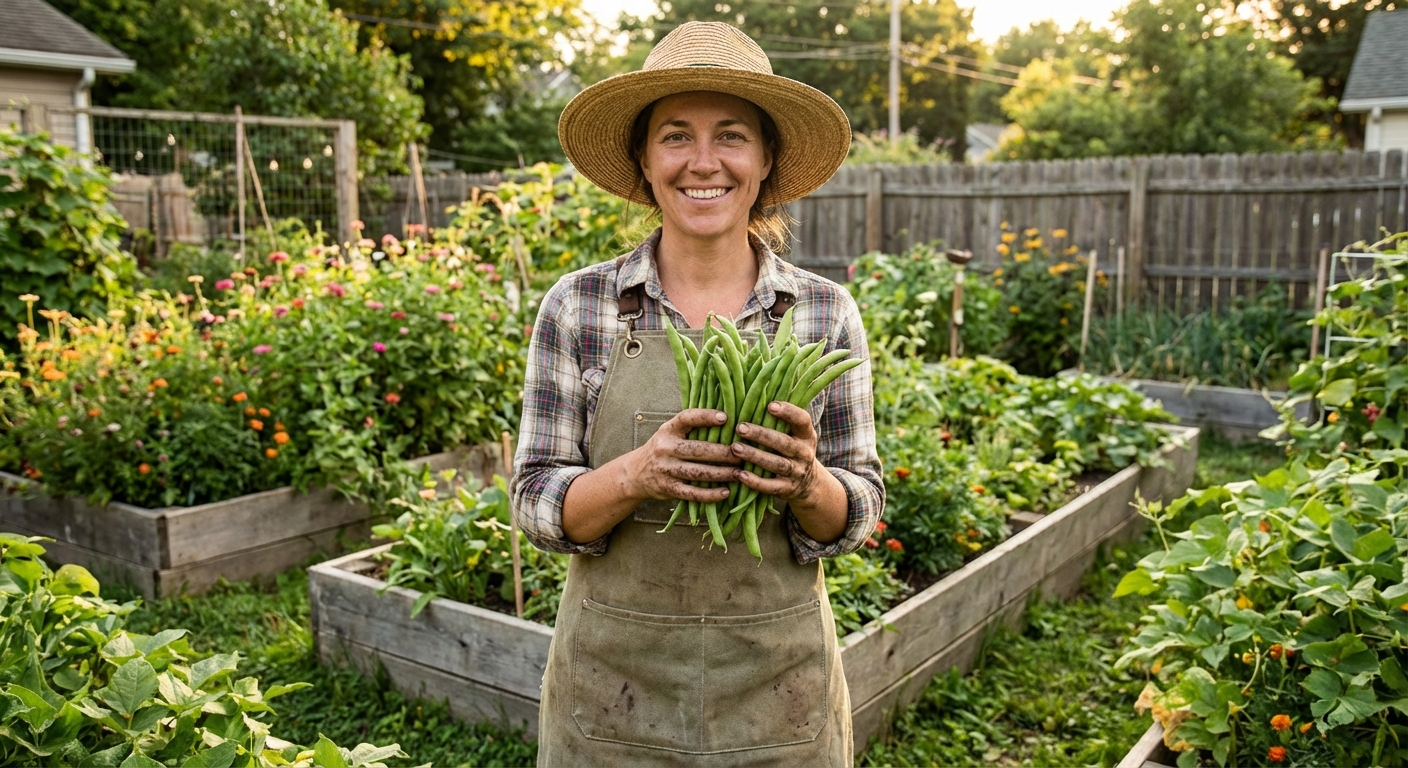
If you grow your own, you are already halfway to a better casserole. The key is harvesting at the right stage and not overcooking.
- Pick young and often: beans should snap cleanly and feel firm, not rubbery.
- Avoid overgrown pods: once the seeds inside start bulking up, the pods get tougher and can turn stringy.
- Store smart: keep unwashed beans in a bag or container in the fridge and use within 3 to 5 days for best texture.
- Blanch before freezing: if you want homegrown beans ready for the holidays, blanch until crisp-tender (often about 3 minutes), cool fast, drain well, and freeze flat.
Ingredient checklist
Use this as a flexible baseline. Adjust amounts to your pan size and how saucy your family likes it.
- Green beans (fresh, frozen, or canned)
- Mushroom sauce (canned soup or homemade)
- Milk or broth for thinning
- Black pepper
- Crispy fried onions (topping)
- Optional: sautéed mushrooms, aromatic onion/shallot, garlic, a little soy sauce or Worcestershire, shredded cheese
If you want one simple upgrade without changing the whole dish, do this: sauté real mushrooms in butter before adding them to the sauce. It adds that savory flavor people expect without making the recipe fussy.
Quick FAQ
Can I use homegrown beans for green bean casserole?
Yes. Blanch first so they stay bright and tender. Homegrown beans can be more variable in size, so taste one after blanching and adjust.
Should I add the onions into the mix?
A small handful inside is fine, but keep most of them for the topping at the end.
What is the best way to keep it from tasting too salty?
Go easy on added salt until you have tasted your sauce. If you use canned soup, remember it is already seasoned. If you add broth plus soy/Worcestershire, add them in small amounts and taste as you go.

Jose Britto
I’m Jose Britto, the writer behind Green Beans N More. I share practical, down-to-earth gardening advice for home growers—whether you’re starting your first raised bed, troubleshooting pests, improving soil, or figuring out what to plant next. My focus is simple: clear tips you can actually use, realistic expectations, and methods that work in real backyards (not just in perfect conditions). If you like straightforward guidance and learning as you go, you’re in the right place.